Discover how AI Email Automation classifies inbound emails, drafts accurate replies, synchronizes helpdesk workflows, and helps B2B teams scale customer communication without sacrificing quality or human oversight.
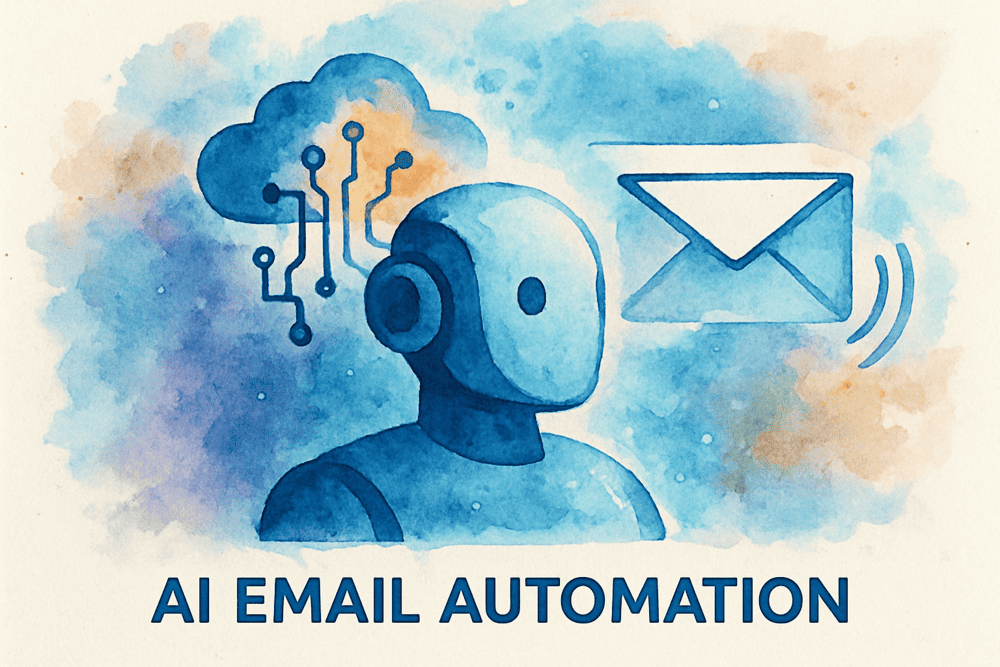
Email remains the definitive channel for formal B2B communication. It provides a documented, asynchronous, and professional medium for complex inquiries, order management, and customer support.
Yet, as transaction volumes grow, manual email handling becomes a bottleneck. Teams face an unsustainable choice: increase headcount to manage the influx or accept slower responses and declining service quality. This operational challenge is where AI Email Automation becomes a strategic necessity.
Manual email management creates a cascade of inefficiencies that impact both operational cost and customer experience. The primary challenges are not merely about volume, but about the cognitive load and process fragmentation it introduces.
Repetitive inquiries, such as status updates or basic policy questions, consume a disproportionate amount of skilled agent time. This leads to slower response times for complex issues and inconsistent answers, as different agents may interpret or phrase information differently.
Overloaded teams experience burnout and higher turnover, while duplicated work—multiple agents researching the same issue—wastes valuable resources. Ultimately, these inefficiencies result in missed Service Level Agreements (SLAs) and erode customer trust.
AI Email Automation is an operational workflow that applies artificial intelligence to streamline the entire email lifecycle. It is not a simple autoresponder. Instead, it intelligently classifies inbound messages, understands customer intent, retrieves relevant business knowledge, and drafts contextual replies.
The system automates routine workflows, such as ticket creation and routing, while maintaining a critical human-in-the-loop for final review and approval of customer-facing communication. This transforms email from a reactive task into a managed, intelligent process.
The first step in automation is accurate classification. AI analyses inbound emails against multiple parameters to determine the appropriate action and routing.
Language and Intent: Identifies the primary language and discerns the underlying request—is it a tracking inquiry, a complaint, a sales question, or a technical support issue?
Urgency and Sentiment: Assesses the tone to flag frustrated customers or time-sensitive matters requiring prioritisation.
Department and Priority: Routes the email to the correct team (sales, support, logistics) and assigns a ticket priority based on content and context.
This automatic triage ensures every email is immediately actioned according to its business criticality.
Once classified, the system generates a draft reply. This is where context is paramount. The AI draws from integrated data sources to produce accurate, helpful responses.
It references CRM data for account history, pulls real-time shipment information from logistics platforms, and retrieves approved answers from the centralised knowledge base. The draft is styled on previous conversation history to maintain a consistent brand voice.
The output is a complete, contextual response suggestion placed directly into the agent's workflow for review and sending.
A core principle of enterprise-grade automation is maintaining human oversight. For all customer-facing communication, the AI acts as a co-pilot, not an autopilot.
Agents review, edit, and approve every drafted response before it is sent. This ensures accuracy, injects empathy where needed, and upholds brand standards. For low-risk, fully automated scenarios (like sending a tracking number), rules can be configured, but the default keeps the human firmly in control.
Effective automation requires deep integration with existing tools. A robust AI Email Automation platform connects seamlessly to the core systems where teams already work.
This includes email clients like Microsoft 365, Gmail, and Outlook, as well as helpdesk platforms such as Zendesk, Freshdesk, or Desk365. Crucially, it also integrates with backend CRM and ERP systems to access the customer and order data necessary for informed replies.
True operational intelligence is achieved when automation tools share a single source of truth. Isolated AI systems create silos and inconsistent information.
AI Email Automation should be part of a unified platform that shares a central knowledge layer with other AI operations. This ensures the same accurate, approved information powers your Knowledge Base Automation, AI Chat Agents, Voice AI systems, and any Agentic AI workflows.
Consistency across all customer touchpoints is the result.
Automated handling of shipment tracking inquiries, customs documentation requests, delivery update notifications, and initial claims intake. AI can pull real-time data from transport management systems to provide precise answers.
Managing reservation amendment requests, answering guest questions about amenities, sending pre-arrival information, and automating post-stay follow-up communication.
Responding to order status queries, processing warranty claims, providing first-level technical support using product manuals, and communicating with distribution partners.
Qualifying sales inquiries, triaging project requests, guiding new clients through onboarding steps, managing contract-related questions, and scaling general customer support.
Enterprise adoption mandates rigorous security. A compliant AI Email Automation platform is designed with governance from the ground up.
It adheres to GDPR and other regional data privacy regulations by ensuring data processing transparency and enabling right-to-erasure workflows. Detailed audit trails log every AI action and human review. Approval workflows and role-based access controls ensure only authorised personnel can configure automation or send certain types of communication.
Data is processed within stipulated enterprise security parameters, with no unauthorised data sharing with external AI models.
Implementing automation without a strategic framework leads to suboptimal results or new risks. Several common mistakes can undermine success.
Deploying fully autonomous email sending without a human review layer is a significant risk to quality and brand reputation. Similarly, implementing disconnected AI systems that do not share a common knowledge base creates information inconsistency.
Poor prompt management for reply generation leads to off-brand or inaccurate outputs. Finally, launching without operational monitoring means you cannot measure performance, track ROI, or identify areas for improvement.
When implemented correctly, the business benefits are measurable and substantial. Organisations report tangible improvements in key operational metrics.
Response times often decrease significantly, directly improving SLA compliance. Operational costs are lowered as agent productivity rises, handling more inquiries with the same team. Communication becomes consistent, reinforcing brand reliability.
These factors collectively drive higher customer satisfaction scores and enable customer operations to scale efficiently alongside business growth.
The evolution points towards more sophisticated, proactive customer operations. We are moving from reactive email handling to predictive support orchestrated by autonomous AI agents.
These agents will manage multi-channel communication (email, chat, voice) from a single workflow, predicting customer needs based on behaviour and initiating appropriate actions. The system will orchestrate complex tasks, such as rescheduling a shipment and notifying all stakeholders, by executing workflows across integrated business platforms.
MATIKA builds enterprise AI Email Automation as part of an integrated operational platform. We do not provide isolated point solutions. Our approach connects AI-driven email classification and reply generation with Knowledge Base Automation, Voice AI, AI Chat Agents, and Agentic AI workflows.
Every component draws from one centralised, governed knowledge layer. This ensures accuracy, consistency, and scalability. We work with clients to design and implement automation that enhances your team's capabilities, reduces operational friction, and delivers a measurable return on investment.
How long does implementation typically take? A phased implementation for a core use case, including integration and training, can often be delivered in 8-12 weeks.
Is our data used to train public AI models? No. Enterprise platforms operate under strict data processing agreements. Your customer data and business knowledge remain within your controlled environment and are not used to train external models.
Can it integrate with our legacy CRM or ERP system? Yes. A robust platform offers API-led integration capabilities and often has pre-built connectors for common enterprise systems. The feasibility for custom legacy systems is assessed during the discovery phase.
How is GDPR compliance maintained? Through features like data processing records, the ability to locate and delete individual customer data across the system, and ensuring all automated processing has a lawful basis as defined by your organisation.
What is the typical accuracy rate for AI-generated replies? Accuracy is highly dependent on the quality and structure of the underlying knowledge base. With a well-maintained knowledge source, draft replies are typically over 90% accurate, requiring only minor agent refinement.
Can we automate emails in multiple languages? Yes. Leading systems support classification and reply generation in all major business languages, drawing from multilingual knowledge bases.
How do you measure ROI? Key metrics include average handling time, emails processed per agent hour, SLA achievement rates, and customer satisfaction scores (CSAT). A baseline is established before implementation for comparison.
What level of technical expertise is required from our team to manage the platform? The platform is managed via user-friendly interfaces for routine tasks like reviewing drafts and analysing reports. Deeper configuration changes are supported by your MATIKA team or can be managed by your IT department with appropriate training.
AI Email Automation represents a fundamental shift from manual, reactive communication to intelligent, scalable workflow. It empowers teams to handle higher volumes without compromising on the quality and personal oversight that B2B relationships require.
The strategic advantage lies not just in efficiency gains, but in creating a consistent, reliable, and responsive customer experience that supports sustainable growth.
To explore how AI Email Automation can be designed for your specific operational challenges, we invite you to book an AI Discovery Workshop with MATIKA. This session will map your current processes, identify high-impact automation opportunities, and outline a clear path to implementation.
Did you like the post?
Learn how AI helps commerce businesses predict support spikes, monitor inventory risks, reduce repetitive customer inquiries, and improve operational efficiency across the entire customer journey.
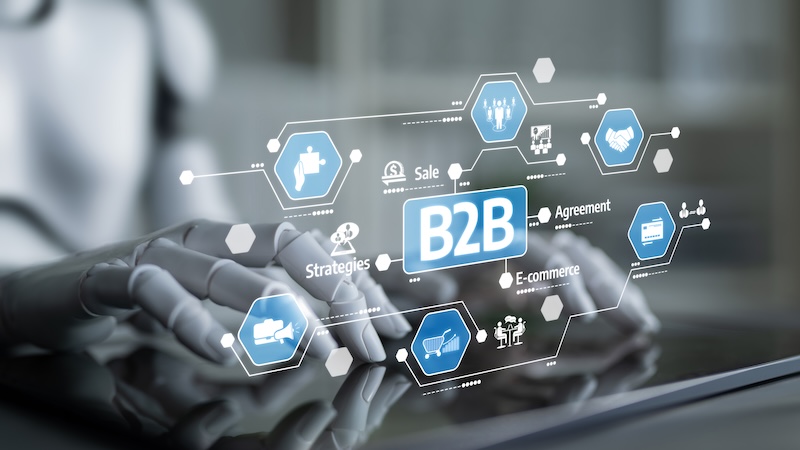
Discover how AI-assisted email automation helps B2B companies deliver faster, more relevant customer communication while reducing manual workload and improving customer engagement.

