Discover why AI-driven process automation is becoming essential for modern businesses. Learn how intelligent workflows reduce manual work, improve operational efficiency, and help organizations scale sustainably.
Explain why businesses can no longer rely on manual processes as customer expectations, operational complexity, and competition continue to increase.
Define AI-driven process automation and explain how Artificial Intelligence combines with workflow automation, business rules, and enterprise software to automate operational processes intelligently.
Discuss the limitations of rule-based automation, including:
rigid workflows
manual decision making
disconnected systems
lack of adaptability
high maintenance costs
Explain how AI overcomes these limitations.
Describe automation opportunities including:
customer service
document processing
email automation
workflow approvals
inventory management
scheduling
reporting
knowledge management
business communications
Explain how AI helps employees by:
prioritizing tasks
recommending actions
predicting operational issues
summarizing information
reducing repetitive work
rather than replacing human expertise.
Describe why successful automation always combines AI with human oversight for approvals, exceptions, and strategic decisions.
Explain how AI automation connects with:
ERP
CRM
Microsoft 365
Helpdesk platforms
HR systems
Finance systems
Voice AI
AI Chat Agents
Knowledge Base Automation
using APIs and workflow orchestration.
Automating guest communication, reservations, reviews, and operational coordination.
Shipment updates, customer communication, documentation, and exception handling.
Quality management, production planning, maintenance workflows, and documentation.
Client onboarding, approvals, document workflows, and internal collaboration.
Discuss KPIs including:
operational efficiency
cycle time reduction
labor savings
response time
SLA compliance
employee productivity
customer satisfaction
ROI
Cover mistakes such as:
automating inefficient processes
implementing AI without strategy
disconnected automations
poor governance
lack of monitoring
ignoring employee adoption
Discuss emerging trends including:
Agentic AI
autonomous workflows
AI copilots
predictive operations
intelligent orchestration
self-improving business processes
Explain how MATIKA helps organizations analyze business processes, identify automation opportunities, connect enterprise systems, and implement practical AI solutions that create measurable operational improvements.
Include 8–10 frequently asked questions covering AI automation, implementation, governance, integrations, ROI, employee adoption, and security.
Finish with a strong call-to-action encouraging readers to book an AI Discovery Workshop and identify the processes that will generate the highest return through AI-driven automation.
Did you like the post?

Discover how Process Mining and AI reveal hidden bottlenecks, repetitive work, and operational inefficiencies—helping businesses automate the right processes instead of the wrong ones.
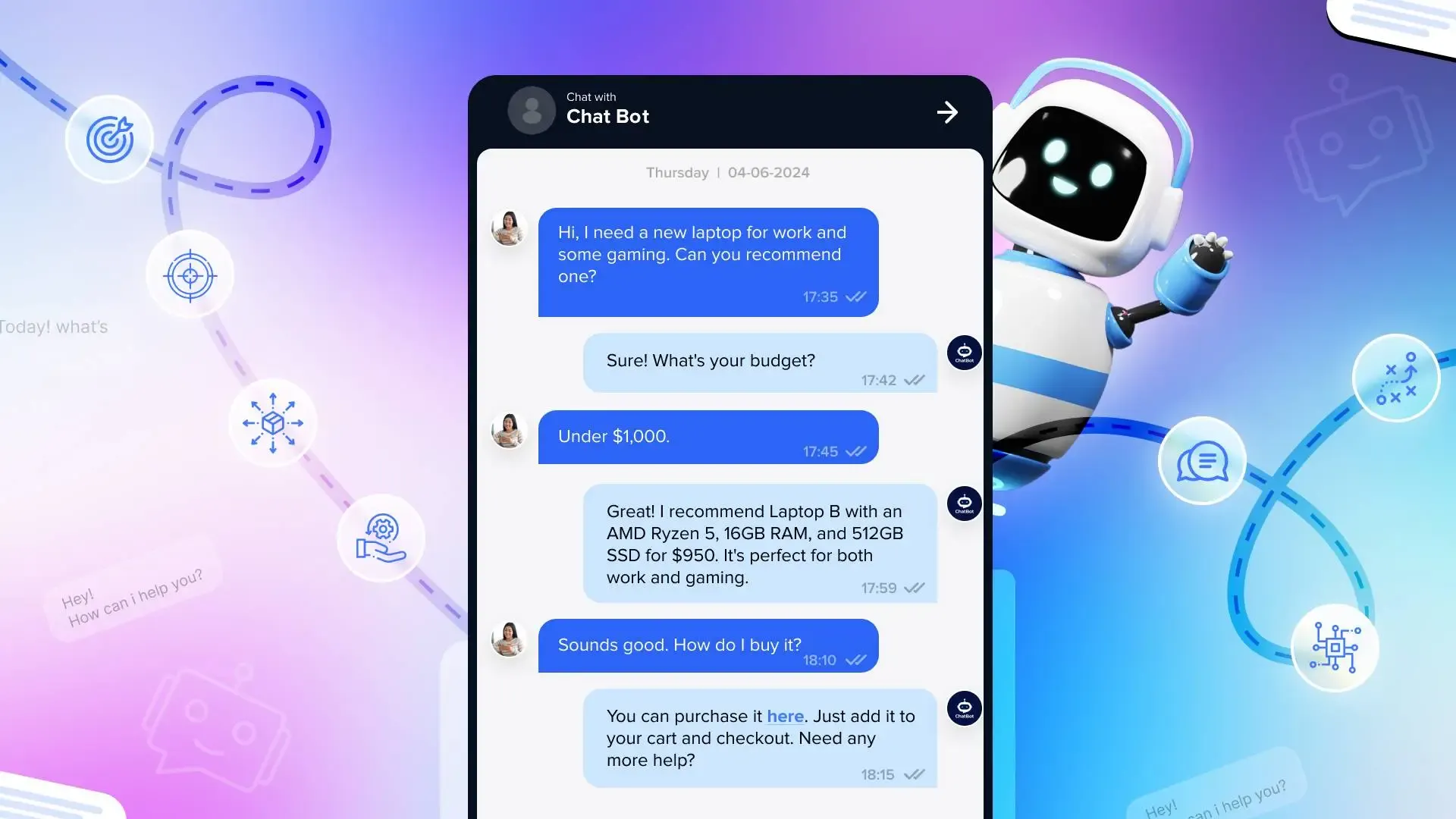
Discover how AI chatbots help B2B companies automate routine customer communication, reduce support workload, and strengthen long-term customer relationships without sacrificing human expertise.

